

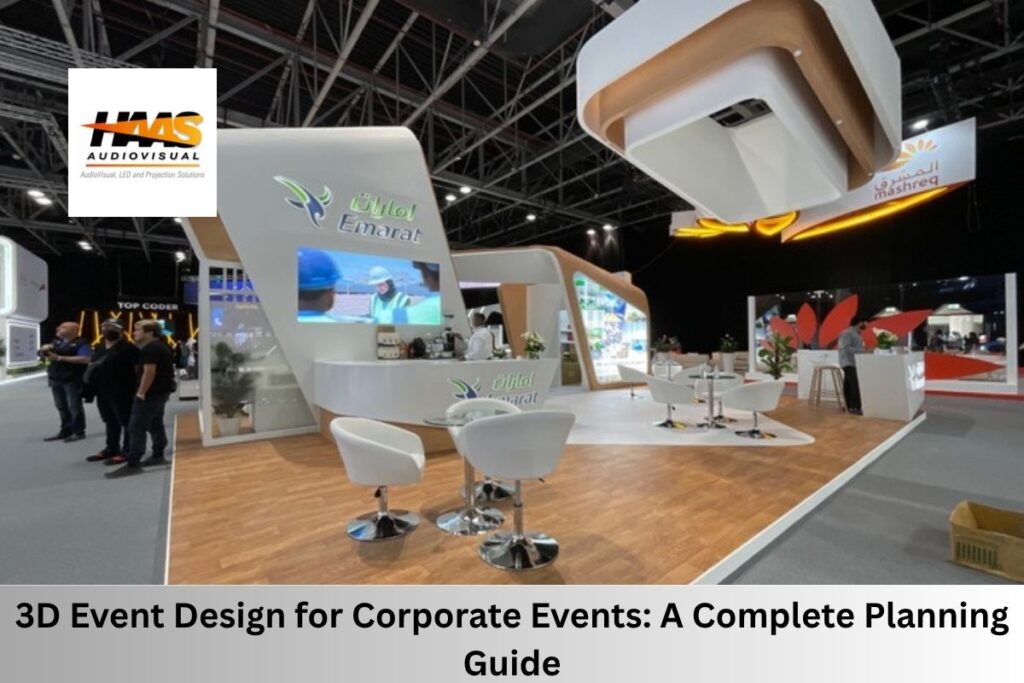
Corporate events have evolved far beyond simple conference rooms, standard stage setups, and rows of chairs. Today, businesses want experiences that impress attendees, strengthen brand identity, and deliver memorable moments. As a result, 3D event design has become one of the most powerful tools in modern event planning.
Whether you’re organizing a corporate conference, product launch, annual meeting, trade show, networking event, or executive summit, visualizing every detail before installation can save time, reduce costs, and eliminate surprises. That’s exactly where 3D event design comes in.
Instead of relying on sketches or flat layouts, planners can now create realistic virtual environments that show exactly how an event will look before a single piece of equipment arrives on-site. This approach improves collaboration, increases stakeholder confidence, and helps teams make better decisions throughout the planning process.
Moreover, 3D event visualization allows organizers to experiment with layouts, branding elements, lighting concepts, seating arrangements, and audience flow long before event day. Consequently, companies can avoid expensive mistakes while creating more engaging attendee experiences.
In this complete guide, you’ll learn how 3D event design works, why it matters for corporate events, the tools involved, and the best practices that help transform concepts into unforgettable experiences.
Why 3D Event Design Is Changing Corporate Event Planning
Traditional event planning often leaves room for uncertainty. Even with detailed floor plans, stakeholders may struggle to imagine the final setup. Consequently, misunderstandings can occur between planners, clients, venue managers, and production teams.
With 3D event rendering, everyone sees the same vision from the start. Instead of interpreting drawings differently, teams can review realistic visual models that accurately represent the final event environment.
This level of clarity offers several benefits:
- Better communication among stakeholders
- Faster approval processes
- Reduced setup errors
- Improved budget management
- More accurate space planning
- Enhanced attendee experiences
- Stronger brand presentation
Furthermore, companies gain confidence knowing exactly what guests will experience before the event takes place.
Understanding the Core Components of 3D Event Design
Successful event planning involves numerous moving parts. Fortunately, 3D technology brings these elements together into one cohesive visual environment.
At its foundation, a 3D event design model includes all critical event components. These elements work together to create a complete digital representation of the venue and event experience.
Common design components include:
- Stage placement
- Seating arrangements
- Lighting systems
- LED walls and screens
- Registration areas
- Networking spaces
- Branding installations
- Exhibition booths
- Audience traffic flow
- Furniture placement
Additionally, planners can adjust these elements instantly. This flexibility makes it easier to evaluate multiple concepts before selecting the best solution.
As a result, clients receive a more accurate understanding of the event long before production begins.
How 3D Venue Design Improves Event Success
Every corporate event starts with the venue. However, choosing a venue is only the first step. The real challenge lies in maximizing the available space.
Through 3D venue design, planners can create detailed digital replicas of event locations. These virtual environments allow teams to test layouts and identify opportunities that might otherwise go unnoticed.
For example, planners can determine the following:
- Optimal stage positioning
- Best audience viewing angles
- Emergency exit accessibility
- Crowd movement patterns
- Networking zone placement
- Sponsor visibility opportunities
Moreover, venue managers can collaborate more effectively with production teams. Since everyone works from the same visual reference, coordination becomes smoother and more efficient.
This approach ultimately reduces stress while increasing overall event quality.
The Role of 3D Floor Plans in Event Layout Planning
A well-designed layout significantly impacts attendee engagement. Unfortunately, traditional diagrams often fail to communicate spatial relationships clearly.
A 3D floor plan event solution eliminates this challenge by providing depth, perspective, and scale. Rather than looking at flat drawings, stakeholders can virtually explore the event environment.
Benefits of 3D floor plans include:
- Realistic room visualization
- Improved seating optimization
- Better traffic flow planning
- Accurate capacity management
- Easier sponsor placement decisions
- Enhanced accessibility planning
Additionally, planners can quickly compare different layout options. This flexibility supports smarter decision-making while ensuring every square foot serves a purpose.
When attendees can navigate spaces comfortably, the entire event experience improves.
Creating Immersive Experiences with 3D Event Visualization
Modern attendees expect more than information. They want immersive experiences that capture attention and create lasting impressions.
This is where 3D event visualization becomes a game-changer.
Instead of imagining ideas, planners can showcase detailed virtual environments complete with lighting effects, branding elements, staging concepts, and attendee perspectives. Consequently, clients can experience the event before construction begins.
Key visualization advantages include the following:
- More engaging client presentations
- Faster design approvals
- Better stakeholder confidence
- Reduced design revisions
- Improved creative exploration
Furthermore, visualization tools help brands align event environments with marketing objectives. Every visual element can reinforce messaging and support business goals.
The result is a more intentional and impactful event experience.
Designing Impactful Stages with 3D Stage Design
The stage often serves as the centerpiece of a corporate event. Whether hosting keynote speakers, product launches, or panel discussions, stage design directly influences audience engagement.
Using 3D stage design event technology, planners can test countless configurations before finalizing the setup.
Elements commonly visualized include:
- Stage dimensions
- LED screen placement
- Lighting positions
- Speaker sightlines
- Camera angles
- Scenic structures
- Brand graphics
- Presentation screens
Additionally, production teams can identify technical challenges early in the planning process. This proactive approach reduces last-minute adjustments and improves execution quality.
As a result, presenters enjoy a more professional environment while audiences benefit from improved visibility and engagement.
Choosing the Right 3D Event Design Software
Not all design tools offer the same capabilities. Therefore, selecting the right 3D event design software is essential for successful planning.
The ideal solution should balance usability, visualization quality, and collaboration features.
When evaluating software, look for:
- Realistic rendering capabilities
- Venue modeling tools
- Lighting simulation features
- Collaboration options
- Cloud-based accessibility
- Fast rendering speeds
- Custom branding integration
- Technical production support
Many event professionals also rely on specialized design services to maximize results. For businesses seeking expert support, exploring professional 3D design solutions can streamline the planning process and enhance event outcomes.
Learn more about advanced visualization services.
Additionally, professional event production partners can help transform creative concepts into fully realized experiences, as Haas Audiovisual does.
Investing in the right technology and expertise often leads to stronger event performance and higher attendee satisfaction.
Best Practices for Planning a Corporate Event in 3D
Even the most advanced tools require strategic planning. To maximize the benefits of 3D event rendering, follow proven best practices throughout the project lifecycle.
Start by defining clear objectives before creating visual concepts. Understanding event goals ensures every design decision supports business outcomes.
Additional best practices include:
- Establish audience expectations early
- Create detailed venue measurements
- Review multiple layout options
- Test attendee traffic patterns
- Include branding throughout the design
- Collaborate with production teams
- Validate technical requirements
- Gather stakeholder feedback regularly
Moreover, schedule design reviews at key milestones. Regular evaluations help identify opportunities for improvement before production begins.
A structured planning process consistently produces stronger results.
Common Mistakes to Avoid in 3D Event Planning
While 3D technology offers tremendous advantages, mistakes can still occur when teams overlook critical details.
One common issue is focusing exclusively on aesthetics while ignoring functionality. Beautiful designs must also support attendee comfort, visibility, and movement.
Other mistakes include:
- Ignoring venue limitations
- Overcrowding floor layouts
- Underestimating technical requirements
- Neglecting accessibility needs
- Skipping stakeholder reviews
- Failing to test audience sightlines
- Rushing approval processes
Fortunately, realistic modeling helps identify these challenges early. By addressing issues before installation, planners can avoid unnecessary expenses and disruptions.
Ultimately, successful events balance creativity with practicality.
Final Thoughts
Corporate events have become increasingly sophisticated, and expectations continue to rise. As a result, planners need smarter tools that support creativity, collaboration, and precision.
3D event design empowers organizations to visualize ideas, optimize spaces, improve communication, and deliver exceptional attendee experiences. From detailed venue layouts and immersive visualizations to advanced stage concepts and realistic renderings, every aspect of the event can be planned with confidence.
More importantly, 3D planning minimizes risk while maximizing impact. Stakeholders gain a clear understanding of the final environment, production teams work more efficiently, and attendees enjoy a more polished experience.
If your goal is to create memorable corporate events that impress audiences and achieve business objectives, incorporating 3D design into your planning process is no longer optional; it is becoming the industry standard.
Frequently Asked Questions
1. What is 3D event design?
3D event design is the process of creating realistic digital representations of event spaces, layouts, stages, and branding elements before physical setup begins.
2. Why is 3D event visualization important for corporate events?
It helps stakeholders understand the final event design, reduces planning errors, improves communication, and speeds up approval processes.
3. What is the difference between a 2D floor plan and a 3D floor plan?
A 2D floor plan shows a flat layout, while a 3D floor plan provides depth, perspective, and realistic visualization of the event environment.
4. How does 3D event rendering improve event planning?
3D event rendering creates lifelike visuals that help planners identify potential issues, refine designs, and communicate ideas more effectively.
5. What industries benefit from 3D event design?
Corporate events, trade shows, product launches, conferences, exhibitions, hospitality events, and experiential marketing campaigns all benefit from 3D event design.
