

Visual technology has come a long way over the last decade. Today, businesses, event organizers, museums, brands, and entertainment companies constantly look for new ways to capture attention and create memorable experiences. Among the most popular display solutions are projection mapping and traditional projection. While both technologies use projectors to display content, they create very different experiences.
At first glance, they may seem similar. After all, both rely on projected visuals. However, once you explore their capabilities, the differences become clear. Traditional projection displays images or videos on a flat surface, while projection mapping transforms almost any object into a dynamic visual canvas. As a result, projection mapping often feels more immersive and engaging.
That said, choosing the right solution depends on your goals, budget, venue, and audience expectations. Some projects benefit from the simplicity and affordability of traditional projection. Others require the creativity and wow factor that only projection mapping can provide.
In this guide, we’ll compare projection mapping and traditional projection from every angle. We’ll explore their features, benefits, limitations, costs, use cases, and performance. By the end, you’ll have a clear understanding of which technology works best for your specific needs.
Understanding Traditional Projection
Traditional projection is the most common form of visual display technology. It involves projecting images, videos, presentations, or graphics onto a flat screen, wall, or surface using a projector.
For years, businesses, schools, conference centers, and houses of worship have relied on traditional projection systems because they are easy to install and operate. In many cases, users simply connect a device, align the projector, and begin presenting content.
The primary purpose of traditional projection is information delivery rather than visual transformation. Because of this, it remains a practical solution for many applications.
Common Uses of Traditional Projection
- Business presentations
- Corporate meetings
- Classroom instruction
- Conference events
- Training sessions
- Movie screenings
- Church services
- Indoor advertising
Traditional projection performs exceptionally well when the goal is to communicate information clearly and efficiently.
What Is Projection Mapping?
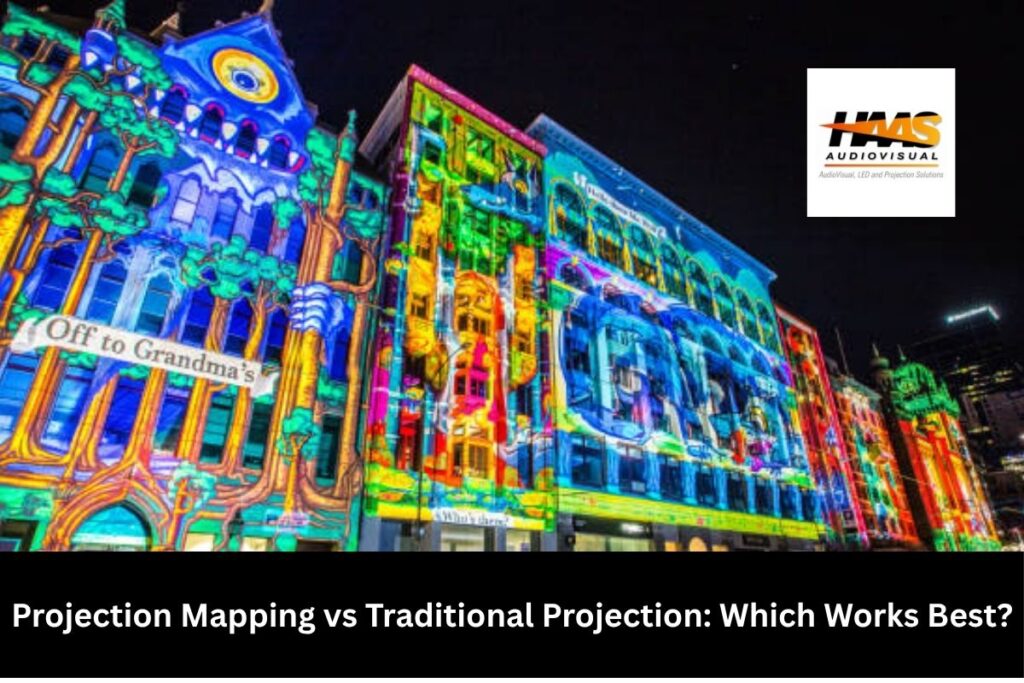
Projection mapping, also known as video mapping, takes projection technology to an entirely different level. Instead of displaying content on a flat screen, it projects visuals onto three-dimensional objects, structures, and environments.
Using specialized Projection Mapping Software, designers align digital content precisely with the shape and dimensions of a physical object. As a result, buildings, cars, stages, sculptures, products, and even entire landscapes can come alive with motion graphics and visual effects.
This technology creates the illusion that static objects are moving, transforming, breaking apart, or interacting with the audience.
Many organizations explore professional solutions with Haas Audiovisual.
For businesses interested in advanced mapping solutions, this resource provides additional information.
The ability to transform ordinary surfaces into extraordinary visual experiences explains why projection mapping continues to gain popularity worldwide.
How Projection Mapping Works
To understand why projection mapping creates such stunning visuals, it helps to know how the process works.
First, designers create a digital model of the object or surface they want to project onto. Next, they use specialized Projection Mapping Software to align visual content with the object’s exact dimensions.
Then, a high-performance Projection Mapping Projector displays the content with pixel-perfect precision. Every animation, color, and effect appears exactly where intended.
The process typically involves:
- Surface scanning and measurement
- 3D content creation
- Software calibration
- Visual alignment
- Content playback
- Performance optimization
Because every projection must match the object’s shape, preparation is more complex than traditional projection. However, the final result often delivers a far greater visual impact.
Comparing Visual Impact and Audience Engagement
One of the biggest differences between these technologies is audience engagement.
Traditional projection communicates information effectively. It displays presentations, videos, and graphics straightforwardly. However, viewers generally recognize it as a familiar viewing experience.
Projection mapping, on the other hand, creates surprise and excitement. It turns ordinary objects into storytelling platforms that captivate audiences.
For example, instead of projecting a company logo onto a screen, projection mapping can make an entire building appear to transform into the brand itself. Consequently, viewers become emotionally invested in the experience.
Why Projection Mapping Creates More Engagement
- Creates immersive experiences
- Generates stronger emotional responses
- Increases audience participation
- Enhances storytelling
- Encourages social media sharing
- Produces memorable brand interactions
When audience engagement is the priority, projection mapping often outperforms traditional projection by a significant margin.
Indoor vs Outdoor Performance
Venue conditions play a major role in determining which solution works best.
Traditional projection works exceptionally well indoors where lighting conditions can be controlled. Conference rooms, auditoriums, classrooms, and meeting spaces are ideal environments.
However, outdoor environments present additional challenges. Ambient light, weather conditions, and large-scale surfaces require more powerful equipment.
This is where Outdoor Projection Mapping shines.
Large-scale projection mapping installations frequently transform:
- Buildings
- Monuments
- Stadiums
- Event venues
- Theme parks
- Public spaces
Similarly, Architectural Projection Mapping has become a popular choice for city celebrations, product launches, tourism campaigns, and cultural festivals.
When projecting onto large structures outdoors, projection mapping delivers an unmatched visual experience that traditional projection simply cannot replicate.
Interactive Experiences: The Future of Visual Storytelling
Modern audiences expect more than passive viewing experiences. They want interaction.
Traditional projection generally provides a one-way communication experience. The audience watches content, but their actions rarely affect what appears on screen.
Interactive Projection Mapping completely changes that dynamic.
By combining sensors, cameras, motion tracking, and real-time software, interactive systems respond to audience movements and behaviors.
For example:
- Floor projections react to footsteps.
- Walls respond to hand gestures.
- Retail displays change based on customer actions.
- Museum exhibits provide personalized experiences.
As technology evolves, interactive experiences continue to redefine how organizations connect with their audiences.
This growing trend explains why many brands now prioritize Interactive Projection Mapping over conventional projection systems.
Cost Comparison: Which Offers Better Value?
Budget is often one of the most important considerations.
Traditional projection remains the more affordable option for most organizations. Equipment costs are relatively low, installation is straightforward, and content creation requirements are minimal.
Projection mapping generally requires a larger investment because it involves:
- Advanced software
- Creative design services
- High-lumen projectors
- Technical setup
- Content production
- Calibration and testing
However, cost should not be the only factor in the decision.
While projection mapping requires a higher upfront investment, it often delivers greater marketing impact, stronger audience engagement, and more social media exposure.
Traditional Projection Advantages
- Lower setup costs
- Faster deployment
- Easier operation
- Minimal technical expertise
- Budget-friendly
Projection Mapping Advantages
- Premium visual experiences
- Stronger audience engagement
- Greater brand visibility
- Enhanced storytelling
- Higher event memorability
The better value depends entirely on your objectives.
Real-World Projection Mapping Examples
The best way to appreciate projection mapping is to see how organizations use it in real-world applications.
Some of the most impressive Projection Mapping Examples include global product launches, historic building transformations, immersive art installations, and theme park attractions.
Businesses use projection mapping to:
- Launch products
- Promote brands
- Create event experiences
- Enhance exhibitions
- Drive customer engagement
- Transform retail environments
Meanwhile, educational institutions and creative professionals frequently rely on Video Mapping Tutorial resources to learn new techniques and develop innovative projects.
As software and hardware continue improving, the possibilities expand every year.
Which Solution Should You Choose?
Choosing between projection mapping and traditional projection ultimately comes down to your goals.
If your primary objective is delivering presentations, educational content, training materials, or informational videos, traditional projection remains a practical and cost-effective choice.
However, if you want to create unforgettable experiences, strengthen brand awareness, attract attention, or immerse audiences in visual storytelling, projection mapping offers significantly greater creative potential.
Choose Traditional Projection If:
- You need a simple display solution.
- Your budget is limited.
- Information delivery is the priority.
- Setup time is restricted.
- The venue is small or controlled.
Choose Projection Mapping If:
- You want maximum audience engagement.
- Visual storytelling matters.
- Brand visibility is important.
- You need a memorable event experience.
- Creative impact is the goal.
Understanding these differences will help you invest in the right technology for your project.
Final Thoughts
Both projection mapping and traditional projection have valuable roles in today’s visual communication landscape. Traditional projection remains reliable, affordable, and highly effective for presentations and information sharing. Meanwhile, projection mapping pushes creative boundaries and transforms ordinary spaces into extraordinary experiences.
As audience expectations continue to evolve, immersive technologies are becoming increasingly important. Businesses and event organizers who want to stand out often find that projection mapping provides the excitement and engagement needed to leave a lasting impression.
Ultimately, the best choice depends on your objectives, audience, budget, and desired impact. By carefully evaluating your goals, you can confidently select the solution that delivers the strongest results.
FAQs
1. What is the difference between projection mapping and traditional projection?
Traditional projection displays content on a flat surface, while projection mapping projects content onto three-dimensional objects and structures, creating immersive visual effects.
2. What is Architectural Projection Mapping?
Architectural Projection Mapping involves projecting visuals onto buildings, landmarks, and large structures to create dynamic visual experiences.
3. Can projection mapping be interactive?
Yes. Interactive Projection Mapping uses sensors, cameras, and tracking technology to allow audience actions to influence projected content.
4. Is projection mapping expensive?
Projection mapping generally costs more than traditional projection due to content creation, software requirements, and technical setup. However, it often delivers greater engagement and marketing value.
5. What type of projector is needed for projection mapping?
A high-brightness Projection Mapping Projector is typically required, especially for large-scale or outdoor installations.

One Comment